Where to get Botox & Dysport: Med spa vs. dermatology office
Key takeaways
- Both med spas and dermatology offices can offer Botox and Dysport, but provider qualifications and medical oversight tend to vary.
- Dermatology providers have specialized training in skin health and disease, which helps inform cosmetic treatment planning and expertise.
- Your injector’s qualifications and experience matter more than the type of facility alone when choosing where to get Botox or Dysport.
- Ask about provider credentials, product sourcing, and follow-up care before scheduling an injectables appointment.
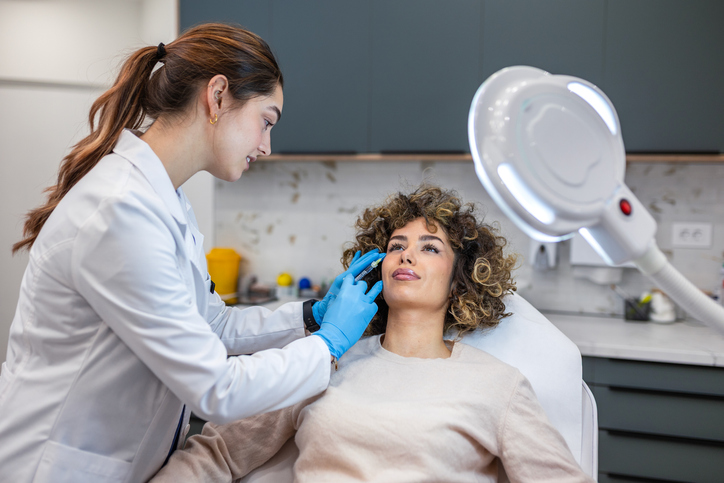 If you’re considering Botox, Dysport, or other neuromodulators for fine lines, wrinkles, or as a proactive treatment, you might already know that both med spas and select dermatology offices offer injectables. You might be wondering: which is the best place to go? Provider qualifications, access to comprehensive medical care, and the overall experience varies greatly between the two. Understand the differences between a med spa and dermatology office to help you make an informed decision about where to get Botox and Dysport.
What is the difference between a med spa and a dermatology office?
Both med spas and dermatology offices may offer Botox and Dysport injections. However, the type of medical oversight and the provider's expertise can differ from one practice to another.
A medical spa,or med spa, combines certain cosmetic treatments with a spa-like environment. Services may include Botox and Dysport injections, dermal fillers, facials, chemical peels, and other aesthetic procedures.
Med spas vary in how they are staffed and managed. Some have physicians or other qualified medical professionals who perform injections or supervise treatment. Others rely on licensed practitioners with different levels of training and experience. Requirements for administering injectables and supervising providers vary by state.
A dermatology office specializes in the health, diagnosis, and treatment of the skin, hair, and nails. Depending on the practice, services may include medical dermatology, skin cancer screenings, surgical procedures, and cosmetic treatments such as Botox and Dysport.
Dermatology providers’ medical background can be particularly valuable when evaluating facial anatomy, assessing skin concerns, and determining whether a cosmetic treatment is appropriate. Some dermatology practices also employ other qualified medical professionals who provide cosmetic injections within their scope of practice. When you receive Botox or Dysport at a dermatology office, you may also have access to medical expertise if you have questions about your skin, medical history, or treatment options.
Nathan Weir, MD, PhD, a board-certified dermatologist at DOCS Dermatology’s Anderson and Blue Ash locations, says he frequently sees patients who have had a poor experience at a med spa. “There are skilled injectors working in med spas,” he says, “But when things go wrong, this issue is often that there wasn’t enough training or medical oversight behind that appointment.”
Is it better to get Botox and Dysport at a med spa or dermatology office?
The best place to get Botox or Dysport depends on the qualifications of the injector, the quality of care, and how well the provider understands your goals. There are several factors to consider.
Medical expertise and training
In order to safely and effectively administer Botox and Dysport, a provider must understand facial muscles, anatomy, appropriate dosing, and how treatment can affect surrounding areas. Dermatology providers receive specialized medical training in skin health and facial conditions. This background can help inform treatment planning and support decisions about which areas to treat and which to leave alone.
A personalized treatment plan
Everyone's facial anatomy, skin, and aesthetic goals are different. Some people want to soften prominent forehead lines, while others want to reduce frown lines or crow's feet without significantly changing their facial expressions. A qualified provider should evaluate your facial movements, discuss your concerns, and explain what Botox and Dysport can realistically accomplish.
At a dermatology office, rather than taking a one-size-fits-all approach, your provider may also be able to assess other skin concerns that affect your goals. For example, if you are concerned about uneven skin tone, sun damage, or skin texture, they can discuss whether additional treatments may be appropriate.
Having access to a broader range of dermatologic services can make it easier to coordinate care for different skin concerns.
Safety and medical oversight
Botox and Dysport are prescription medications, and injections can cause side effects. Common effects include temporary redness, swelling, tenderness, and bruising at the injection site. Less commonly, treatment can cause eyelid or eyebrow drooping.
Although serious complications are rare, botulinum toxin products carry important safety warnings. Choosing a properly licensed and trained provider who uses authentic, FDA-approved products is essential. A dermatology office can offer access to medical evaluation and follow-up if concerns arise.
Weir explains that med spa regulations vary significantly by state. “The medical director [at a med spa] might rarely be on site, and sometimes they aren’t even trained in dermatology or aesthetics. So, you can have a very different level of supervision depending on where you go.”
Before you receive treatment, share your medical history, medications, allergies, and any previous experiences with injectable treatments. A qualified provider can help determine whether Botox or Dysport is appropriate for you.
“These medications are very safe in the right hands,” says Weir, “but they’re still medicine, and I think they should be treated that way.”
Find safe, high-quality Botox or Dysport treatment at a DOCS Dermatology practice near you.
How do you choose a qualified Botox and Dysport provider?
When choosing between a med spa or a dermatology office, take time to research your provider before scheduling an appointment. Here are a few questions to ask:
- Who will perform my injections? Confirm the provider's name, professional license, and relevant training.
- How much experience do you have with Botox and Dysport? Ask about their experience treating your specific concerns and facial areas.
- Which product will you use? Confirm that the product is authentic and FDA-approved and comes from an authorized source. “You want product that comes straight from the manufacturer or an authorized distributor. If the price seems too good to be true, ask about this,” Weir advises.
- Will I receive a consultation? Your provider should review your medical history, discuss your goals, and explain potential risks and expected results.
- What happens if I have a complication or concern? Understand how to contact the practice and obtain appropriate medical attention after treatment.
Be cautious of unusually low prices, unclear product sourcing, or providers who promise guaranteed results. Botox and Dysport should only be administered by appropriately qualified professionals in a suitable medical setting.
“A good injector will ask you plenty of questions about your goals, your medical history, and any medications you’re on. If nobody’s asking you anything before they pick up a needle, that’s a red flag,” says Weir.
Should you choose a dermatology office for Botox and Dysport?
If you're looking for Botox or Dysport, a dermatology office may be a good choice, particularly if you want cosmetic treatment guided by expertise in skin health and facial anatomy. Ultimately, the most important factors are your provider's qualifications, experience, commitment to safety, and ability to create a treatment plan that reflects your goals.
A consultation is an opportunity to ask questions and learn whether Botox or Dysport is right for you. With an experienced provider and an individualized approach, you can make an informed decision about your cosmetic treatment.
Find Botox and Dysport treatment near you in Ohio
DOCS Dermatology has board-certified dermatology providers across Ohio, so cosmetic treatments like Botox and Dysport are never far away. Our offices serve patients throughout Cincinnati, Cleveland, Columbus, Dayton, and surrounding areas.
The bottom line
Both med spas and dermatology offices may be options for Botox and Dysport, but choosing a qualified, experienced provider should be the top priority. A dermatologist's specialized training in skin health and facial anatomy can be valuable when developing a personalized cosmetic treatment plan. Before scheduling an appointment, ask about your injector's credentials, experience, product sourcing, and approach to patient safety. A consultation gives you the opportunity to discuss your goals, understand your options, and determine whether treatment is right for you.
Treat fine lines and wrinkles with Botox or Dysport at DOCS Dermatology, with practices conveniently located across Ohio.
FAQs
What's the difference between Botox and Dysport?
Botox and Dysport both relax the facial muscles and treat fine lines and wrinkles. They differ in active ingredients, formulation, speed of onset, and dosing. Typically, one unit of Botox is equal to about three units of Dysport. A board-certified dermatology provider can advise which treatment may be better for your skin type and treatment goals.
How much does Botox and Dysport cost?
Botox typically costs around $10-$20 per unit, while Dysport typically costs between $4-$8 per unit. Because a higher dose of Dysport is needed, the end cost between the two is usually comparable.
What to expect during the first appointment?
At your appointment for Botox or Dysport at a dermatolgy office, your provider will ask several questions about your treatment goals, medical history, and skin type. Then, they'll carefully map where to inject the medication. The process only takes a few minutes, and most people feel nothing more than a quick pinch.
How long do results of Botox and Dysport last?
Botox and Dysport results typically last for three to four months, though it varies from person to person.