Key takeaways
- Hormonal acne is caused by excess oil production, triggered by certain hormone levels, particularly androgen.
- There are oral and topical treatment options available for acne; a dermatology provider can help determine which is right for you.
- When it comes to at-home treatments, keep your skincare routine simple and add in new products slowly to avoid acne flares.
- It’s possible for hormonal acne to be a chronic issue, but the right treatment approach can be found to keep breakouts minimal.
- DOCS Dermatology has offices across Ohio, including Columbus, Cincinnati, Dayton, Cleveland, and surrounding communities, so expert care for hormonal acne is close to home.
 You might have expected to get acne breakouts as a teenager, but in adulthood, acne can be particularly frustrating. Hormonal acne, a type of adult acne, is triggered by hormone fluctuations and can affect anyone, though it tends to be more common in women. The good news is that there are a variety of effective treatment strategies for hormonal acne, including oral and topical options—a dermatology provider can help you figure out which is right for you. Learn what causes hormonal acne and what you, with your provider, can do about it.
What is hormonal acne—and what causes it?
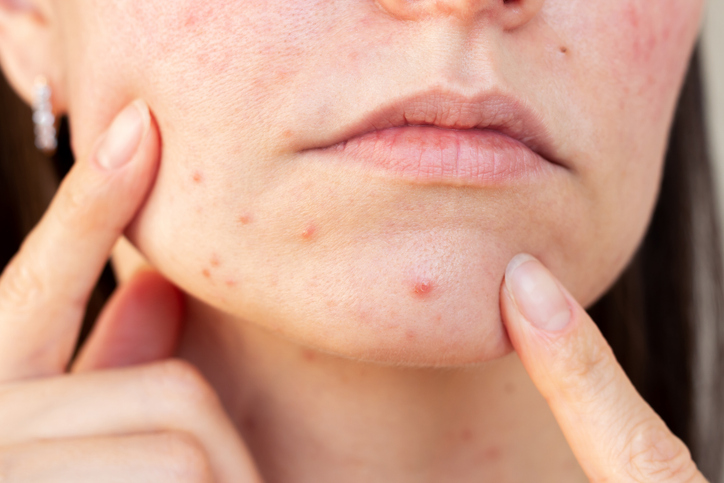
Hormonal acne is a type of adult acne linked to certain hormone levels. It can show up as pimples, papules, blackheads, whiteheads, nodules, or cysts. It commonly flares up right before or during menstruation, pregnancy, or menopause, though it isn’t limited to those times.
At its root, hormonal acne is caused by overproduction of sebum in oil glands, leading to clogged pores and breakouts. The overproduction of sebum can be triggered by certain hormone levels. High levels of testosterone and progesterone, for example, can trigger acne breakouts, while high levels of estrogen can actually decrease the likelihood of a flare.
How to tell the difference between hormonal acne and other types of acne
Not all acne is created equal, and knowing the difference can help you and your provider choose the right treatment. Hormonal acne typically:
- Occurs along the chin, lower cheeks, and jawline
- Worsens during hormonal fluctuations like menstruation, menopause, or hormone replacement therapy
- Improves with oral hormonal treatments such as birth control or spironolactone (however, for some people, certain types of birth control may worsen hormonal acne)
This type of acne is different from fungal acne, which comes from excess yeast rather than excess oil, and tends to be itchier and more evenly distributed. It's also different from typical teenage acne, which favors the forehead and nose and is driven more by clogged pores alone than hormone fluctuations.
A board-certified dermatology provider can help determine the root cause of your acne and build a treatment plan around it, rather than guessing what to buy from drugstore shelves.
Talk to a DOCS Dermatology provider about your acne
What are the treatment options for hormonal acne?
There are a variety of effective treatment options for hormonal acne, including both oral and topical treatments, says Sarah Serrao, FNP-C, nurse practitioner at DOCS Dermatology in Dayton, Ohio. Hormones may always fluctuate throughout various stages of life, but it’s more than possible to find the right treatment for you.
Oral treatments
- Spironolactone: Blocks androgen hormones that lead to excess oil production. Serrao says this is one of her go-to treatment options for hormonal acne. “It’s a safe long-term therapy that can prevent those deep, painful cystic lesions.”
- Birth control: Contains estrogen and/or progestin and lowers androgen hormone levels. However, some types of birth control may actually be more prone to flaring acne, so it’s best to get dermatology provider guidance on which one is right for hormonal acne.
Serrao notes that spironolactone and birth control can also be taken together for potentially increased efficacy.
Topical treatments
- Topical spironolactone: Blocks local androgens in the skin without the systemic effect of the oral version.
- Clascoterone: Decreases androgen levels within the oil glands. Serrao says this topical is not particularly drying or irritating, making it a good option for those with sensitive skin.
- Retinoids: Such as tretinoin or retin-A, speed up skin cell turnover and prevent dead skin cells from clogging pores. Retinoids are also designed to improve skin texture and tone.
Cosmetic treatments
While you may be tempted to look at cosmetic treatments like chemical peels or laser therapies for hormonal acne, it’s not recommended. “They do not treat the underlying cause of hormonal acne,” says Serrao. They can be useful later, though, for treating any scarring left behind once active breakouts are under control.
Can hormonal acne be treated at home?
When it comes to your at-home skincare routine, keep in mind that oftentimes, less is more. “Sometimes, an overly complicated skincare routine could be flaring someone’s acne,” Serrao says. Instead of trying to use a wide range of products, start with the basics: a gentle cleanser, moisturizer, and daily sunscreen. From there, you can try adding in different products, depending on your skin type.
Some drugstore products that may help combat breakouts include adapalene gel, which is a gentler retinoid than prescription options, azelaic acid, which can inhibit oil production and kill bacteria, and hypochlorous acid, a gentle bacteria-killing agent.
Can hormonal acne be cured?
Because our hormones are constantly fluctuating, it’s possible for hormonal acne to be a chronic issue. However, that doesn’t mean your hormonal acne will always be at the same severity level or, if you start an oral therapy, that you’ll have to be on it forever. With the help of a board-certified dermatology provider, many people are able to effectively manage their hormonal acne and keep breakouts to a minimum.
Will hormonal acne leave scars?
Yes, hormonal acne can leave scars, especially if the breakouts are deep, painful, or left untreated. Scarring is also more likely if you pick or squeeze pimples, as this increases inflammation. Once your acne is under control, you can work with your dermatology provider to treat your acne scars. Common, effective treatments include certain topicals as well as cosmetic treatments.
When should you see a dermatologist?
You should see a dermatologist for hormonal acne if breakouts are bothering you on an ongoing basis. Seeing a dermatology provider is the best way to ensure you don’t waste time and money on treatments that aren’t likely to work for your type of acne or skin. When you meet with a provider, they can tailor treatment to you.
Find hormonal acne treatment near you in Ohio
DOCS Dermatology brings board-certified dermatology providers across Ohio so hormonal acne care is never far away. Our offices serve patients throughout Cincinnati, Cleveland, Columbus, Dayton, and surrounding areas.
The bottom line
There are a variety of effective treatments available for hormonal acne, including spironolactone, birth control, and topical treatments such as topical spironolactone, clascoterone, and retinoids. A licensed dermatology provider can help determine the best treatment for your acne and skin type.
Find personalized treatment for hormonal acne