Understanding Moh's surgery
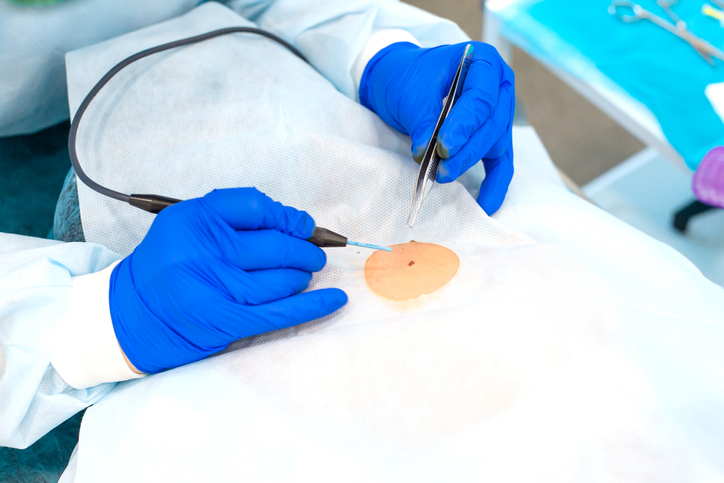
If you've been diagnosed with skin cancer, your dermatology provider may recommend Mohs micrographic surgery, also known as Mohs surgery, to remove the cancer while preserving as much healthy skin as possible. Mohs surgery is a specialized procedure that removes cancerous tissue in thin layers and examines each layer under a microscope until no cancer cells remain in the treated area.
Mohs surgery is commonly used to treat basal cell carcinoma and squamous cell carcinoma, particularly when the cancer is located in an area where preserving healthy tissue is important. DOCS Dermatology offers Mohs surgery across Ohio across Cincinnati, Columbus, Cleveland, and Dayton. Keep reading to learn how the procedure works, its benefits, and what recovery involves.
Find a Mohs surgeon near you.
Key takeaways
- Mohs surgery removes skin cancer layer by layer, and each layer is examined under a microscope to check for remaining cancer cells.
- It may be recommended for cancers on the face, ears, nose, and other areas where preserving healthy tissue is important.It offers some of the highest cure rates for many basal cell and squamous cell carcinomas.
- Patients are typically awake with local anesthesia during surgery, which is performed in an outpatient setting.Healing depends on the size and location of the surgical site and how the wound is repaired.
- Fellowship-trained Mohs surgeons at DOCS Dermatology treat patients in Cincinnati, Columbus, Cleveland, and Dayton.
What is Mohs surgery?
Mohs micrographic surgery is a specialized skin cancer treatment that removes cancerous tissue while preserving as much surrounding healthy skin as possible. The procedure was developed by Dr. Frederic Mohs and is now widely used to treat certain types of skin cancer.
Unlike some other skin cancer removal procedures, Mohs surgery involves examining nearly the entire surgical margin of each removed tissue layer under a microscope. This allows the surgeon to identify the precise location of any remaining cancer cells and remove additional tissue only where needed.
How does Mohs surgery work?
Here’s the typical process:
- Preparation: The surgeon prepares the treatment area by cleaning the skin and injecting a local anesthetic to numb the area.
- First layer: The visible cancer and a thin layer of surrounding tissue are removed.
- Microscope review: The tissue is examined under a microscope. The surgeon determines whether cancer cells remain at the edges or base of the sample.
- Additional layers: If cancer cells are still found, more tissue is removed from the area where they remain.
- Repair: The wound is repaired once no more cancer cells are detected. Depending on its size and location, it may be allowed to heal naturally, closed with stitches, or repaired using another technique.
Because each layer is examined before the next is removed, the procedure can take several hours. Patients should plan to remain at the office for much of the day.
Who gets Mohs surgery?
Mohs surgery is most commonly used to treat basal cell carcinoma (BCC) and squamous cell carcinoma (SCC), the two most common types of skin cancer.
Your dermatology provider may recommend Mohs surgery based on several factors, including:
- Cancer location: Mohs is frequently used for skin cancers on the face, nose, eyelids, ears, lips, hands, and other areas where preserving healthy tissue is especially important.
- Cancer size and borders: Tumors with poorly-defined edges may benefit from the precise margin assessment Mohs provides.
- Cancer recurrence: Mohs may be recommended when skin cancer returns after previous treatment.
- Cancer characteristics: Aggressive tumor features or certain higher-risk skin cancers may make Mohs an appropriate treatment option.
- Individual risk factors: A history of skin cancer, immune suppression, and other clinical considerations may influence the treatment recommendation.
Mohs surgery isn't necessary for every skin cancer. Depending on the cancer's type, size, location, and risk level, your dermatology provider may recommend standard surgical excision, curettage and electrodesiccation, topical medications, or another treatment. A dermatology provider can evaluate your diagnosis and determine whether Mohs surgery is the most appropriate option for you.
Where can I get Mohs surgery near me?
Mohs surgery is performed by dermatologic surgeons who have fellowship training in Mohs surgery. When choosing a provider, look for a qualified, fellowship-trained Mohs surgeon with experience treating your type of skin cancer and working in the affected area.
You can ask about the surgeon's training, experience, and approach to repairing the wound after the cancer is removed. DOCS Dermatology offers specialized skin cancer treatment, including Mohs surgery, in Cincinnati, Columbus, Cleveland, Dayton, and surrounding communities.
If you've been diagnosed with skin cancer or have questions about your treatment options, contact a DOCS Dermatology office near you in Cincinnati, Columbus, Cleveland, Dayton, and surrounding areas to learn whether a Mohs consultation is appropriate for you.
How should I prepare for Mohs surgery?
Before receiving Mohs surgery, you can eat and drink as you normally would and take any prescribed medications, unless your provider advises otherwise, such as with blood thinners. Because surgery typically takes at least two hours, and oftentimes longer, you’ll want to clear your schedule for the day. Wear comfortable clothing, though depending on the surgery site location, you may change into a gown. If you have any additional questions or concerns about preparing for surgery, consult with your surgeon.
How effective is Mohs surgery?
Mohs surgery is considered one of the most effective treatments for many basal cell and squamous cell carcinomas. By examining the removed tissue during the procedure, the surgeon can identify and remove remaining cancer cells while preserving healthy tissue.
Reported cure rates vary depending on the cancer type, whether it has been treated before, and other tumor characteristics. For many basal cell carcinomas, Mohs surgery has reported cure rates of up to 99% for previously untreated tumors and approximately 94% for recurrent tumors. Cure rates for squamous cell carcinoma are also high, although they vary based on the cancer's characteristics and risk factors.
One of the primary advantages of Mohs surgery is its ability to evaluate the surgical margins during treatment. This can reduce the likelihood of leaving cancer cells behind and help minimize unnecessary removal of healthy tissue. However, no skin cancer treatment guarantees that cancer will never return. Regular follow-up appointments and skin examinations remain important after treatment, especially for people with a history of skin cancer.
What are the risks of Mohs surgery?
Mohs surgery is generally considered safe, but as with any surgical procedure, it carries potential risks and side effects.
Possible complications include:
- Bleeding
- Infection
- Scarring
- Pain or tenderness
- Nerve damage
- Delayed wound healing
Your surgeon will explain the risks associated with your specific procedure and provide instructions for caring for the wound. Contact your provider if you experience increasing pain, spreading redness, worsening swelling, pus, fever, or bleeding that doesn't stop with the recommended pressure.
How long does it take to recover from Mohs surgery?
Recovery time after Mohs surgery varies depending on the size and location of the wound, the repair method, and your overall health. Many people can return to light daily activities within a day or two, although your surgeon may recommend avoiding strenuous exercise, heavy lifting, or activities that could stretch the wound for a period of time.
During recovery, you may need to:
- Keep the wound clean and follow your surgeon's instructions for changing dressings.
- Apply prescribed or recommended ointments as directed.
- Avoid activities that could cause bleeding or put tension on the surgical site.
- Attend follow-up appointments for wound checks or stitch removal, if needed.
- Protect the healing area from sun exposure and follow your dermatology provider’s guidance on scar care.
Initial wound healing often takes several weeks, but complete healing and scar maturation can take several months or longer. Wounds that require more complex reconstruction may need additional recovery time. Your surgeon will explain what to expect based on your procedure and when you can safely return to your usual activities.
The bottom line
Mohs surgery is a highly effective treatment for many basal cell and squamous cell carcinomas. By removing cancerous tissue layer by layer and examining it under a microscope, the procedure helps ensure that cancer cells are removed while preserving as much healthy skin as possible. Although Mohs surgery offers high cure rates, the best treatment depends on your specific diagnosis, and recovery varies from person to person.
If you've been diagnosed with skin cancer, a qualified dermatologic surgeon can help you understand your options and determine whether Mohs surgery is right for you. Regular skin examinations and follow-up care are also important for monitoring your skin health and identifying any new or recurring skin cancers early.
Fellowship-trained Mohs surgeons at DOCS Dermatology treat patients in Cincinnati, Columbus, Cleveland, Dayton, and surrounding areas. Find a Mohs surgeon near you to schedule a consultation and learn whether this treatment is right for you.
Mohs surgery FAQs
Does Mohs surgery hurt?
Before starting surgery, your surgeon will apply local anesthetic to numb the area. You shouldn’t experience any pain during the procedure, but if you do, alert your surgeon.
How long does Mohs surgery take?
Surgery typically takes at least two hours, though some can take upwards of three or four hours, depending on how many layers of skin require removal.
Will I be awake during Mohs surgery?
Yes, but the surgery site will be adequately numbed.
Will Mohs surgery leave a scar?
Yes, due to the removal of several layers of skin, Mohs surgery does leave a scar. While scars are permanent, they typically fade over time.
Is Mohs surgery covered by insurance?
Mohs surgery is covered by most major insurance plans. Contact your insurance provider to confirm coverage.
Can skin cancer come back after Mohs surgery?
It’s possible, yes. Mohs surgery has a high cure rate (up to 99% for previously untreated BCC tumors and approximately 94% for recurrent BCC tumors), but there is a chance of recurrence. Regular follow-ups are necessary to ensure continued clearance.