LOCATIONS PROVIDERS
SERVICES
Services
We have a wide range of services designed to address your specific skincare needs.
ABOUT RESOURCES

Pay your bill in full

Quickly and securely pay your outstanding balance online in one easy step.

Pay in Full

Payment Plan

We've partnered with Sunbit to offer flexible payment plans so you can pay over time. Apply below.

Apply Now
HOME LOCATIONS PROVIDERS SERVICES ABOUT US RESOURCES BILL PAY CONTACT SCHEDULE NOW
Services / Inflammatory & Autoimmune Disorders / Rosacea

Rosacea

Expert rosacea care from board-certified dermatologists in Cincinnati, Cleveland, Columbus, Dayton, and surrounding cities—reduce redness, calm flare-ups, and achieve a more even complexion.

Rosacea is a chronic condition that can cause facial redness, visible blood vessels, bumps, and irritation. At DOCS Dermatology, we provide personalized, evidence-based rosacea treatment plans to reduce flare-ups, soothe discomfort, and improve your skin’s overall appearance.


How do you know if it’s rosacea?
Rosacea can sometimes be confused for acne, an allergic reaction, or even dry skin. A board-certified dermatologist can accurately diagnose your condition. Common rosacea symptoms include:

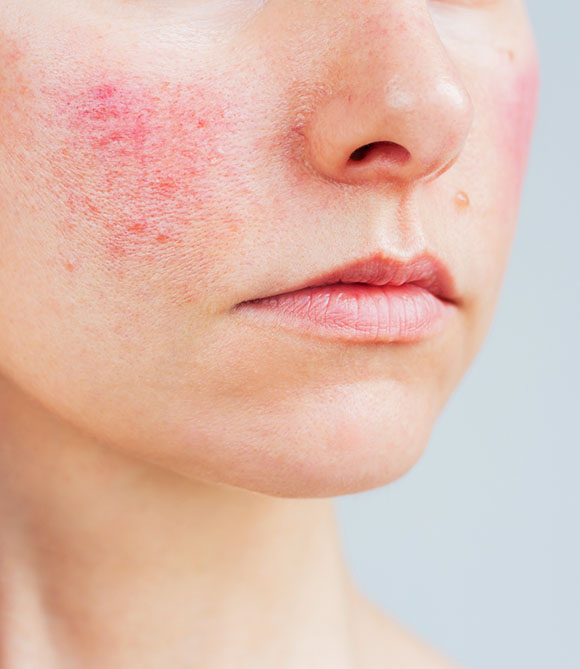
Facial redness: Especially across the cheeks, nose, forehead, and chin.
Flushing or blushing easily: Redness that persists after heat, stress, or spicy foods
Visible blood vessels: Small red or purple veins may appear across the surface of your skin.
Bumps: Red, sometimes pus-filled bumps that may resemble acne.
Thickened skin: In more severe cases, skin may appear thick, rough, or swollen.
Eye irritation: Watery, bloodshot, or burning eyes can be a sign of ocular rosacea.
What causes rosacea?
The exact cause of rosacea isn’t fully understood, but these factors are believed to contribute to its development and flares:

Genetics: Rosacea often runs in families.
Immune system response: An overactive immune reaction may contribute to skin inflammation.
Environmental triggers: Heat, sun exposure, wind, spicy foods, alcohol, and stress can all trigger flare-ups.
Vascular changes: Widened blood vessels near the surface of the skin can increase visible redness.
How do we treat rosacea?
Professional treatment can greatly reduce redness, flare-ups, and discomfort. Treatment is personalized to your symptoms, rosacea type, and triggers. Your dermatologist may combine treatments for optimal results and long-term rosacea management. Common therapies include:

Topical treatments: Prescription creams or gels containing ingredients like metronidazole, azelaic acid, or ivermectin to calm inflammation and redness.
Oral medications: Antibiotics such as doxycycline to reduce inflammation.
Laser and light therapies: Target visible blood vessels and persistent redness to create a more even skin tone.
Lifestyle and skincare adjustments: Use gentle, fragrance-free products and identify triggers that worsen your symptoms.
Eye care: For ocular rosacea, warm compresses, eyelid hygiene, and prescribed eye drops can relieve discomfort.

Prioritize your skin health with expert dermatology care.

Our board-certified dermatologists and plastic surgeons, cosmetic dermatology providers, and fellowship-trained Mohs surgeons provide best-in-class treatment for all your skin health needs.

BOOK NOW
Locations Near You
Finding locations near you...
Locations Near You
Finding locations near you...

Frequently asked Questions

What are the different types of rosacea?
Rosacea may appear in a few different forms and vary from mild to severe. Your dermatologist will determine which type you’re experiencing in order to choose the best treatment. The main types of rosacea include erythematotelangiectatic rosacea (ETR), which causes persistent redness, flushing, and visible blood vessels; papulopustular rosacea, characterized by red bumps and pus-filled pimples often mistaken for acne; phymatous rosacea, which leads to thickened, bumpy skin most commonly on the nose and is also called rhinophyma; and ocular rosacea, causing redness, dryness, and irritation in the eyes that can lead to discomfort or vision problems.
What triggers rosacea flare-ups?
Triggers vary from person to person—you may want to try keeping a trigger diary to help you identify your personal triggers. Common triggers for rosacea include sunlight, spicy foods, alcohol, hot beverages, extreme temperatures, stress, and certain skincare products.
Is rosacea the same as acne?
No, while rosacea can cause red bumps similar to acne, it does not involve blackheads or whiteheads and often comes with persistent redness and visible veins.
Can rosacea affect my eyes?
Yes, ocular rosacea can cause eye dryness, irritation, and redness. If you experience these symptoms, see a dermatologist for diagnosis and treatment.
How long does it take to see improvement?
With consistent treatment, most people notice improvement in redness and flare-ups within several weeks to a few months.
When should I see a dermatologist for rosacea?
If you notice persistent redness, bumps, or visible blood vessels, consult a dermatologist for diagnosis and treatment.

Learn More