LOCATIONS PROVIDERS
SERVICES
Services
We have a wide range of services designed to address your specific skincare needs.
ABOUT RESOURCES

Pay your bill in full

Quickly and securely pay your outstanding balance online in one easy step.

Pay in Full

Payment Plan

We've partnered with Sunbit to offer flexible payment plans so you can pay over time. Apply below.

Apply Now
HOME LOCATIONS PROVIDERS SERVICES ABOUT US RESOURCES BILL PAY CONTACT SCHEDULE NOW
Services / Hair, Nail & Sweat Disorders / Hair Loss & Alopecia

Hair Loss & Alopecia

Restore growth and confidence with personalized, compassionate care for hair loss.

Hair loss, or alopecia, can affect anyone—men, women, and children alike—and often takes an emotional toll. Whether caused by genetics, hormones, stress, or autoimmune conditions, our board-certified dermatologists specialize in personalized treatment plans to promote healthy regrowth and prevent further loss.


What causes alopecia?
Alopecia is a broad term that describes hair loss from the scalp or other parts of the body. It can be temporary or permanent, depending on the cause. Our dermatologists carefully evaluate each case to determine the reason for hair thinning or shedding and tailor treatment accordingly.

Common causes include:
Androgenetic alopecia: Also known as male or female pattern baldness, this hereditary condition causes gradual thinning over time.
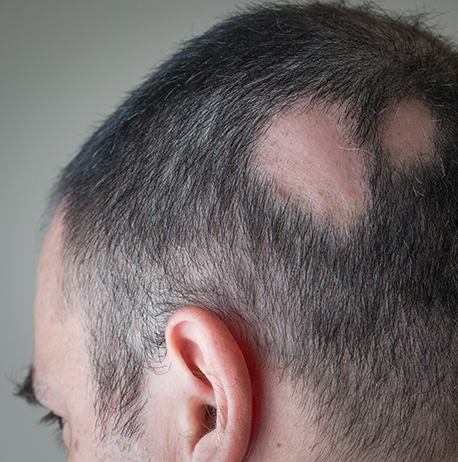
Alopecia areata: An autoimmune condition in which the body’s immune system mistakenly attacks hair follicles, leading to patchy hair loss on the scalp or body.
Telogen effluvium: Temporary shedding often triggered by stress, illness, childbirth, or medication.
Traction alopecia: Hair loss caused by tight hairstyles or repeated pulling on the hair.
Scarring alopecia: Hair loss resulting from inflammation or infection that damages the hair follicles.
What are the symptoms of alopecia?
Symptoms vary depending on the type and cause of hair loss. Some people experience gradual thinning, while others notice sudden shedding or patchy bald spots. Early diagnosis is key—addressing the cause quickly increases the likelihood of restoring and maintaining healthy hair growth.

Consult a dermatologist if you notice gradual thinning on the top or crown of the head, circular or patchy bald spots on the scalp, beard, or eyebrows, sudden hair shedding after illness, stress, or hormonal changes, scalp itching, burning, or tenderness, or broken hairs and visible scarring in affected areas.
How do we treat alopecia?
Hair loss treatment is customized to the cause and severity. Our board-certified dermatologists use a combination of medical and in-office procedural therapies to encourage regrowth, slow further loss, and strengthen existing hair.

Common treatments include:
Topical treatments: Prescription-strength solutions or foams that stimulate follicles and support regrowth.
Oral medications: Hormone-blocking or anti-inflammatory medications that treat specific types of alopecia from the inside out.
Corticosteroid injections: Reduce inflammation and encourage regrowth for conditions like alopecia areata.
Platelet-rich plasma (PRP) therapy: A cutting-edge procedure that uses your own blood’s healing components to stimulate hair follicles and enhance thickness
Laser or light therapy: Improves circulation and promotes regrowth by targeting the scalp with low-level light energy.
Lifestyle and scalp care guidance: Expert recommendations on hair care routines, nutrition, and stress management to support long-term scalp health.

Prioritize your skin health with expert dermatology care.

Our board-certified dermatologists and plastic surgeons, cosmetic dermatology providers, and fellowship-trained Mohs surgeons provide best-in-class treatment for all your skin health needs.

BOOK NOW
Locations Near You
Finding locations near you...
Locations Near You
Finding locations near you...

Frequently asked Questions

Is hair loss permanent?
Not always. Many types of hair loss, such as telogen effluvium or alopecia areata, can be reversible with early diagnosis and treatment. Chronic or scarring forms may require long-term management.
Can stress cause hair loss?
Yes. Stress can trigger temporary shedding (telogen effluvium) by disrupting the normal hair growth cycle. Managing stress and receiving proper care can help hair recover over time.
How is hair loss treated?
Hair loss treatment depends on the root cause and severity of symptoms. Common treatments include topical treatments, oral medications, corticosteroid injections, platelet-rich plasma (PRP) therapy, laser or light therapy, and lifestyle and scalp care guidance.
Are hair loss treatments effective for women?
Absolutely. Hair loss affects women as well as men, and many effective treatments are available for female pattern hair loss and other causes.
When should I see a dermatologist for hair loss?
If you notice unusual shedding, thinning, or bald patches, schedule an appointment promptly. Early evaluation can help prevent further loss and improve treatment outcomes.
Can dermatologists help with early thinning hair?
Yes. Early evaluation can prevent further loss and allow dermatologists to begin proactive treatment before bald spots appear.
How long does it take to see results from hair loss treatments?
Most patients begin to notice improvement within several months. Ongoing follow-up helps maintain regrowth and maximize results.

Learn More